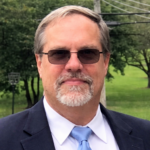
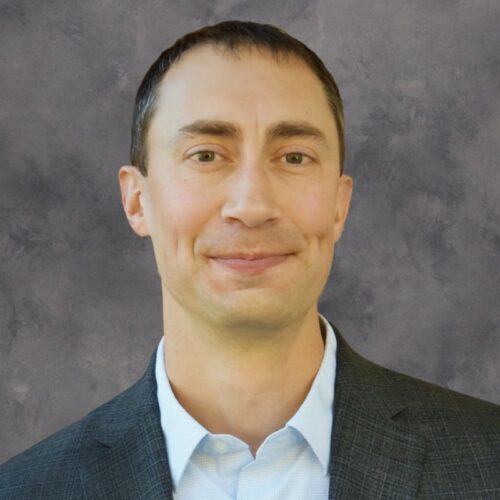
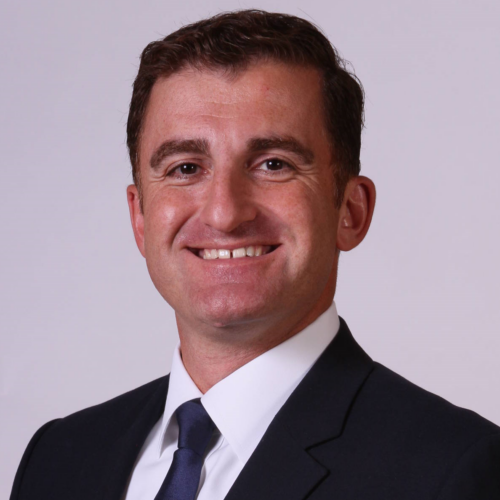
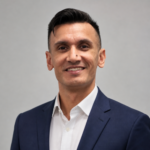
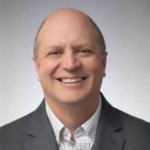
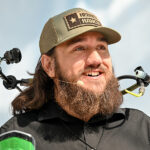
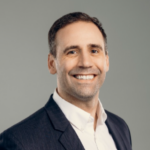
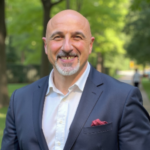
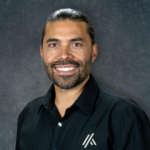
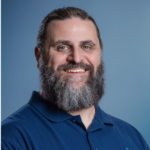
Welcome to DeviceTalks Boston! Meet the editorial team and hear the highlights of the next two-days hitting the stage and show floor.
Open the days discussion by hearing how one of MedTech's leaders sees openings of innovation and investment in this live recording of the DeviceTalks Weekly segment, Future of MedTech Opportunities (FOMO).
Devi Govender, President of Abiomed, leads one of MedTech’s most influential cardiovascular businesses at a pivotal moment for heart recovery and circulatory support innovation. In this conversation, Govender will share how Abiomed is expanding its clinical impact, integrating into Johnson & Johnson MedTech, and shaping the future of heart care through technology, data, and global reach.
Listen to top graduates of the industry's Top startup accelerator!
Building on the first direct observation of glucose Raman signals from in-vivo skin, MIT researchers are advancing band-pass Raman spectroscopy as a path toward truly non-invasive, physiological-level continuous glucose monitoring in a compact optical device. In this session, the team will introduce the band-pass Raman system, share recent human-trial results, and explore how wearable Raman-based CGM devices could redefine diabetes management and continuous metabolic monitoring.
Nearly 40% of the U.S. population is ethnically and culturally diverse, yet African Americans and Hispanics account for only about 5% of clinical trial participants. This lack of representation—rooted in historical mistrust and systemic barriers—contributes to misdiagnosis and poorer health outcomes. In this session, Amy will explore the future of clinical trials, focusing on the changes needed today to drive equity tomorrow. Topics include the role of partnerships, reducing barriers to participation, increasing disease awareness among women, and the evolution of clinical trials to better include underserved communities through policy and practice.
This panel will examine the orthopedic implants market and how innovation is affecting the development of materials, surgical procedures, and overall economics of the industry. With a future-focused perspective, panelists can debate what is changing at the fastest rate in the orthopedics industry, including the shift from hardware to biologically absorbable orthopedic implants, the pressures from value-based care and managing costs, and the willingness of surgeons to adopt new materials.
With FDA approval in hand, Medtronic is moving forward with a commercialization strategy for its surgical robotic system, Hugo. Find out how the company intends to leverage its current position as a surgical tools leader to compete in this growing market.
Intellectual Property (IP) is important for medical technology companies to attract funding and exits, whether M&A or IPO. Learn best practices and pitfalls to avoid in building strategic patent portfolios to close funding, be competitive, and secure an exit. Investors and executives will also discuss how to position a medtech company to attract investors, collaborators, and partners.
AI is no longer experimental in the OR—it’s delivering real clinical impact today. Join world‑renowned surgeons as they perform remote surgery while industry leaders from NVIDIA, Mantyx, Azorg, and Infor have a provocative discussion on how AI and interoperability are redefining surgery in real time—and accelerating what’s next.
This panel will explore how AI‑powered vision, data infrastructure, and connected platforms are being used in live surgical environments today, and why the next wave will be truly game changing. From surgeon‑driven insights to NVIDIA‑enabled compute at scale, you’ll hear how technology and clinical expertise are converging to unlock safer procedures, smarter workflows, and entirely new possibilities in surgical care.
If you want a glimpse into the future of surgery—this is it.
Medical device OEMs continue to drive rapid innovation in the development of lifesaving and life enhancing technologies. To enable this progress, CDMOs must continually innovate, pushing the boundaries of precision, scalability, and cost efficiency to support OEM innovation and cost reduction objectives. In this panel discussion, subject matter experts from Nissha Medical Technologies and EndoTheia will explore advancements in guidewire free steering technologies, DfM, DfA, microtooling, micromolding, microautomation, and microsensor integration. These capabilities are expanding the clinical toolkit available to surgeons and physicians, enabling greater procedural precision, improved outcomes, and next generation minimally invasive solutions.
This session explores how real-time data and AI are at the heart of the OR to power performance-guided surgery. Join us for a look behind the scenes at LUNA™, the next-generation surgical system by Asensus Surgical. LUNA goes beyond teleoperation, using AI to provide direct, real-time assistance during surgery. Beyond the robot hardware and AI, the system leverages a data-centric architecture that connects the surgical components in the OR and integrates with cloud-based procedure and video analysis. This feeds a “data flywheel” that tags data to better understand the operation, uses the surgical insights gained to train best practices which are then used to improve future robotic performance.
Automation is widely adopted across MedTech manufacturing, yet many organizations still struggle to realize its full value. Systems remain disconnected, data is underutilized, and manual intervention continues to limit performance.
Grounded in first-hand experience from both OEM and manufacturing perspectives, this panel will focus on what works, what fails, and how MedTech teams can take a more structured, strategic approach to advancing automation and building scalable manufacturing systems. The conversation examines this gap through the lens of manufacturing maturity, with insights from Teleflex and Vantedge Medical on how systems evolve from isolated automation to connected, data-driven operations.
Panelists will share real-world lessons from implementation, including how OEM teams align internal stakeholders across engineering, operations, and commercial functions while coordinating with manufacturing partners. Topics will include system integration, data utilization, and the operational and organizational barriers that often slow progress.
A key focus will be on how automation strategies are developed and sustained over time, including the role of internal teams and cross-functional alignment in driving business outcomes. Drawing on experience supporting surgical business units, the discussion will highlight how automation decisions impact not only manufacturing performance, but also broader commercial and operational commitments.
The panel will also address a critical question: when does Industry 4.0 create meaningful value, and when does it introduce unnecessary complexity? Panelists will explore how to determine when these investments are truly warranted.
3-5 Learning Objectives:
1. Understand the difference between isolated automation and integrated Industry 4.0 systems, and how that gap impacts performance and scalability
2. Evaluate manufacturing maturity levels and what defines progression from manual processes to connected, data-driven operations
3. Identify common barriers to automation success, including system fragmentation, limited data visibility, and organizational misalignment
4. Understand how early automation strategy and system design decisions influence long-term scalability, integration, and adaptability
5. Understand how OEM teams can align automation strategies with business objectives and manufacturing partners to improve outcomes across the product lifecycle.
Head to the back of the Expo Floor and find lunch options at the food court.
Listen to top graduates of the industry's Top startup accelerator!
In this interview, Cognito Therapeutics CEO Christian Howell will discuss the company’s non-invasive approach to treating Alzheimer’s disease using 40 Hz gamma sensory stimulation delivered through synchronized light and sound. The therapy is designed to evoke coordinated neural activity across brain networks and potentially slow disease progression. Howell will discuss Cognito’s clinical study, the foundational IP behindgamma sensory stimulation, and how emerging research points to broader neurological applications. He’ll also explain how the company is using AI to analyzescientific and clinical signals, strengthen its evidence strategy, and scale efficiently while pursuing one of medicine’s largest unmet needs.
Medical device and health tech companies often build strong products and run successful pilots—only to see adoption stall in real-world clinical settings. The problem isn’t always the technology. It’s the physician’s veto: the clinician who quietly stops using a device, the workflow that won’t adapt, or the reimbursement code that doesn’t exist. In this session, panelists will explore why promising innovations struggle to scale in hospitals and share strategies for designing with clinicians, workflows, and reimbursement realities in mind.
Two leaders from our Front Line Care team will share key lessons from the recent commercial launch of Connex 360, our latest innovation in patient monitoring, offering an inside look at strategy, execution, and early market feedback. Join this session to learn how real-world launch insights are shaping the future of connected patient monitoring and informing next-generation commercial approaches.
As medical devices transition from product development into manufacturing, early design decisions around design requirements and production strategy can significantly impact operational efficiency, cost, quality, and time to scale. This presentation describes an engineering driven approach to designing medical devices for process robustness and clinical success by aligning material selection, operational processes, and validation planning from the outset. Emphasis is placed on using design to improve operations through manufacturability, assembly, automation, and lights out readiness. This is articulated through a surgical device case study that includes reshoring considerations, reduced process variability, and improved manufacturing KPIs such as yield, cycle time, labor content, and scrap. Attendees will learn how early, intentional design choices enable faster operational response to material or process changes while minimizing risk during the transition to sustained manufacturing.
Medical device teams are under increasing pressure to add intelligent monitoring capabilities while maintaining or improving existing performance, mitigating patient data privacy risks, and enabling clinicians to make better informed diagnoses. Through examples like EMG and adaptive prosthetics, we will show how systems can flag deviations from baseline in real time - supporting preventative analytics, improving responsiveness, and preserving privacy. Real-time healthcare doesn’t have to rely on the cloud. On-device AI brings intelligence directly to the patient, reducing latency and improving reliability. This session explores how embedded, on-device AI enables time-series analysis for patient-specific monitoring, allowing systems to detect physiological anomalies while maintaining clinician oversight.
Polymers have been used in medical devices since the early 20th century. Their unique combination of manufacturability, strength-to-weight ratio, cost, and biocompatibility drives their use in products ranging from permanent implants to surgical tools and robotics, but these strengths come with inherent risks. This panel will explore the complexities of material selection, regulatory clearance, and long-term performance. We will specifically address challenges in biocompatibility, sterilization, aging, and environmental impact, teaching attendees how to identify hidden material risks and avoid costly assumptions early in the design process.
As medical and life sciences systems increasingly integrate optics, fluidics, electronics, robotics, and software, moving from prototype to reliable production has become one of the hardest challenges engineering teams face. Design transfer, subsystem integration, and scaling manufacturing often expose hidden complexity that can threaten yield, reliability, and launch timelines.
In this session, we share practical lessons from real programs that successfully transitioned complex platforms into production. Attendees will learn how to identify hidden risks early, avoid common design transfer pitfalls, and build manufacturability into systems from the start. The session will also highlight the operational discipline required to protect quality, traceability, and yield as volumes grow.
Is the surgical humanoid simply a new design philosophy for robotics, or the beginning of a shift toward more autonomous surgical assistance? And what does this mean for surgeons, hospitals, and the broader surgical robotics market? This session explores what happens when surgical robotics begins to move beyond instruments toward intelligent collaborators. We’ll examine how multi-arm robotic architectures, real-time navigation, and emerging “physical AI” platforms could reshape the operating room — particularly in complex hard-tissue procedures such as spine surgery.
Join us for the closing keynote session to celebrate the MedTech industry in Massachusetts, New England and the Northeast. Our panel will explore what works, what doesn't, and look ahead to ensuring the region's leadership position in our amazing industry.
Join us at the close of Day 1 with a Mix & Mingle Networking Reception with drinks, light appetizers, and time to connect with other DeviceTalks Boston attendees and speakers!
Now in its seventh installment, the Women in MedTech Breakfast has become a cornerstone of the DeviceTalks experience—drawing 100+ director-level and above MedTech leaders. On May 28, the tradition continues with time to connect and network with peers, followed by a fireside chat with Carla Goulart Peron, MD, Chief Medical Officer of Royal Philips. Dr. Peron leads Philips’ global medical and scientific teams and brings a global perspective on medical strategy and access to care—particularly across cardiovascular and stroke care and closing the women’s health gap. The program continues with curated small-group breakout discussions led by senior leaders from Medtronic, Abbott, Boston Scientific, and more. (Theme to be announced.)
Thank you to our sponsors!
Pre-registration required.
Additional fee applies - must be added to your event registration to attend.
![]() |
![]() |
![]() |
![]() |
In this FOMO, Prash Chopra, the founding CEO of Petal, will highlight a turning point in our industry: the beginning of an era where healing does not begin with harm. He will reflect on the foundation of today’s surgical robotic industry. Then he will confront a shared frustration: a trajectory in which surgery is becoming more technical, more complex, more costly, and paradoxically less human. Finally, he will make a case that incisionless surgery is not optional - it is inevitable.
Ashley McEvoy, President & CEO of Insulet, shares how a consumer-centered mindset, grounded in real-world patient insights, is redefining what’s possible in MedTech. This keynote explores how purposeful leadership, disciplined execution, and an unwavering commitment to value delivery create medical technologies that empower people to live fully—while driving innovation, trust, and sustainable growth. Attendees will gain a leadership perspective on building enduring and impactful outcomes without compromising clinical rigor, quality, or performance.
Philips is navigating rapid change across connected care, imaging, and digital health. In this panel discussion, Philips' Chief Medical Officer, Dr. Carla Goulart Peron and other company leaders will share perspectives on where Philips is concentrating its innovation effort, and what’s next.
Creating a successful medical device requires more than engineering excellence—it demands deep empathy for the people who use it every day. In this conversation, Insulet’s Joel Goldsmith shares how the team behind Omnipod approaches design, from engaging directly with patients to refining interfaces that must work seamlessly in real life. He will discuss how Insulet incorporates patient feedback into the design and development of Omnipod, the challenge of building intuitive interfaces that support daily diabetes management, and key lessons from designing consumer-grade experiences in a regulated medical device environment.
PCI remains a cornerstone of revascularization therapy, yet outcomes in patients with complex lesions or significant comorbidities can be compromised when treatment decisions rely solely on angiographic assessment. Optical coherence tomography (OCT) offers high resolution visualization of vessel structure, plaque composition, and calcium burden, enabling more precise characterization of lesion severity. An OCT platform that integrates AI driven analysis can automate key measurements and highlight clinically relevant features that support evidence based PCI planning. This session will discuss how enhanced intravascular insight can reduce uncertainty, improve procedural strategy, and ultimately support better patient outcomes.
Catheter development challenges often appear during verification or scale-up, but their root causes frequently trace back to earlier engineering decisions. Architecture choices, material assumptions, tolerance stackups, and extrusion design all interact to shape device performance and manufacturability long before teams fully understand their impact.
This session explores the hidden complexity inside catheter systems and how early decisions, including those that define extrusion profiles, influence performance, manufacturability, and program timelines. Drawing on real-world experience, panelists will share practical approaches for aligning design intent with manufacturing reality to reduce risk and move programs from concept to clinic more efficiently.
Building solutions for human interaction with healthcare professionals, NOT replace a Doctor, but to enable the doctors to get to know us better and for what we need.
Health data is growing rapidly through wearables, medical devices, and digital platforms, yet most people still struggle to understand what their data means or how to act on it. Fragmented signals, isolated metrics, and lack of context leave individuals and clinicians without clear guidance. This session explores how integrating digital biomarkers with established medical knowledge can transform raw data into meaningful insight. Attendees will learn how longitudinal health intelligence can reveal patterns, identify early signals, and help individuals and healthcare professionals make more informed, proactive decisions about health and care.
Details coming soon.
Head to the back of the Expo Floor and find lunch options at the food court.
Brian Miller spent more than two decades at Intuitive, advancing surgical robotics and shaping the future of telesurgery. A longtime advocate for practical innovation, he emphasizes that adoption must be driven by real clinical needs—not technology alone. Now at Sovato Health, Miller brings that grounded perspective to expanding access, usability, and impact in next-generation care delivery.
In this powerful closing keynote, Noland Arbaugh shares what it means to become the first person to use a Neuralink brain-computer interface and how it has reshaped his independence, creativity, and connection to the world. This conversation explores not just how the technology works, but what it makes possible. With a live demonstration of neural control in action, attendees will witness the profound impact that precision robotics, advanced electronics, and AI can have on a person’s life.
CPR can double survival chances after cardiac arrest, yet bystander CPR is often inadequate, and nearly 90% of out-of-hospital victims do not survive. HeartBridge is a mechanical CPR device designed for rapid deployment by untrained users in public spaces. Jack and Helena, members of this MIT start-up, will illustrate the core engineering challenges of building life-critical devices for non-expert users: designing robust safety systems, minimizing cognitive load under stress, and validating performance against clinical guidelines. In the future, HeartBridge aims to integrate with AEDs to optimize bystander resuscitation response. Following the same commercial pathways as AEDs, HeartBridge aims to achieve similar widespread public adoption for emergency response.
Software teams inside FDA-regulated environments often struggle with slipping release dates and long, unpredictable V&V cycles before launch. In this case study with Smith+Nephew, we examine how three software teams improved predictability and transparency within design controls. By redefining “done,” integrating quality activities into each sprint, and creating clearer release evidence throughout development, the teams reduced the regulatory tail at the end of projects and established more regular, reliable release cycles. Attendees will leave with practical steps for improving audit confidence, increasing delivery transparency, and making predictable software releases possible inside a QMS.
As medical devices shrink across electrophysiology, electrosurgery, cardiovascular, and endoscopic imaging, engineers face growing challenges in manufacturability, reliability, and scale. In this talk, ATL’s Vice President of Engineering shares how successful teams turn highly miniaturized concepts into production‑ready devices. Using real‑world examples—including high‑density mapping catheters, chip‑on‑tip imaging, and fine‑wire ribbonization—this session shows why design‑for‑manufacturability, testability, and regulatory thinking must start on day one. The takeaway: miniaturization succeeds only when innovation is structured to work reliably, repeatedly, and at scale.
Subscribe to MassDevice
Advertise with us
For registration or logistic questions, contact events@wtwhmedia.com
Colleen Sepich
Events Sales Director
csepich@wtwhmedia.com
857-260-1360
Heather Herbert
Event Sales Manager
hherbert@wtwhmedia.com
512-760-0570